IGCN Circular Economy Working Group Sets 2026 Strategic Priorities
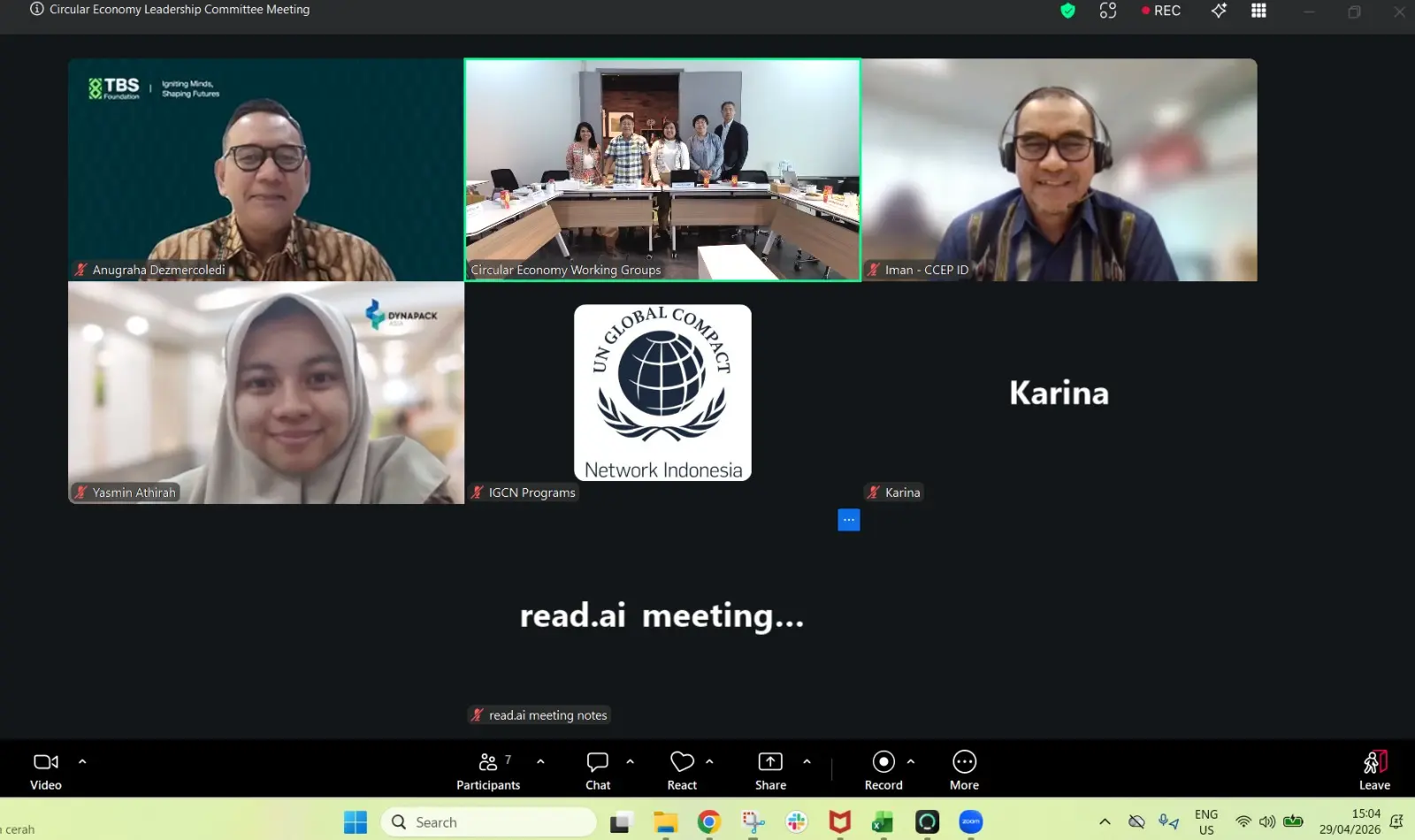
UN Global Compact Network Indonesia (IGCN) convened the first 2026 Leadership Committee Meeting of the Circular Economy Working Group (CEWG) on 29 April 2026, bringing together representatives from member companies and sustainability leaders to define the group’s strategic direction and sectoral priorities for the year ahead.
During the meeting, the Leadership Committee agreed to prioritize four strategic sectors under the Circular Economy Working Group framework: agribusiness and plantation, hazardous and electronic waste, plastic packaging, and waste-to-energy/material initiatives. Each sector was further refined to identify key focus areas and potential collaborative opportunities.
For the agribusiness and plantation sector, the working group highlighted biomethane and Palm Oil Mill Effluent (POME) projects, as well as pulp and paper recycling, as key priorities. These initiatives are expected to support companies in standardizing and offsetting Scope 3 emissions calculations while aligning with Indonesia’s national priorities in the palm oil industry. The working group also identified opportunities to engage suppliers and offtakers in biomethane development initiatives.
In the hazardous and electronic waste sector, the discussion focused on electric vehicle (EV) battery second-life utilization and recycling. The working group plans to collaborate with the Electric Mobility Ecosystem Association and contribute to deeper studies and policy advocacy related to EV battery recycling regulations and second-life implementation. Expanding engagement with stakeholders in this sector will remain an important priority moving forward.
Meanwhile, discussions on plastic packaging emphasized the importance of advancing Extended Producer Responsibility (EPR) advocacy to encourage fair, practical, and enforceable implementation across industries. The working group also explored integrating traceability and just transition considerations for informal waste collection sectors within the EPR framework.
To support implementation of these priorities, CEWG outlined several strategic activities planned for 2026, including a Sectoral Deep Dive on Agribusiness and Plantation, a dedicated discussion on EPR and plastic packaging, a waste-to-energy facility visit, and the development of a white paper on EV battery recycling. In parallel, the working group will continue expanding engagement with potential champion companies and new members across the prioritized sectors.
Through the Circular Economy Working Group, IGCN continues to foster cross-sector collaboration and encourage private sector leadership in advancing circular economy practices that contribute to sustainable development and climate action in Indonesia.